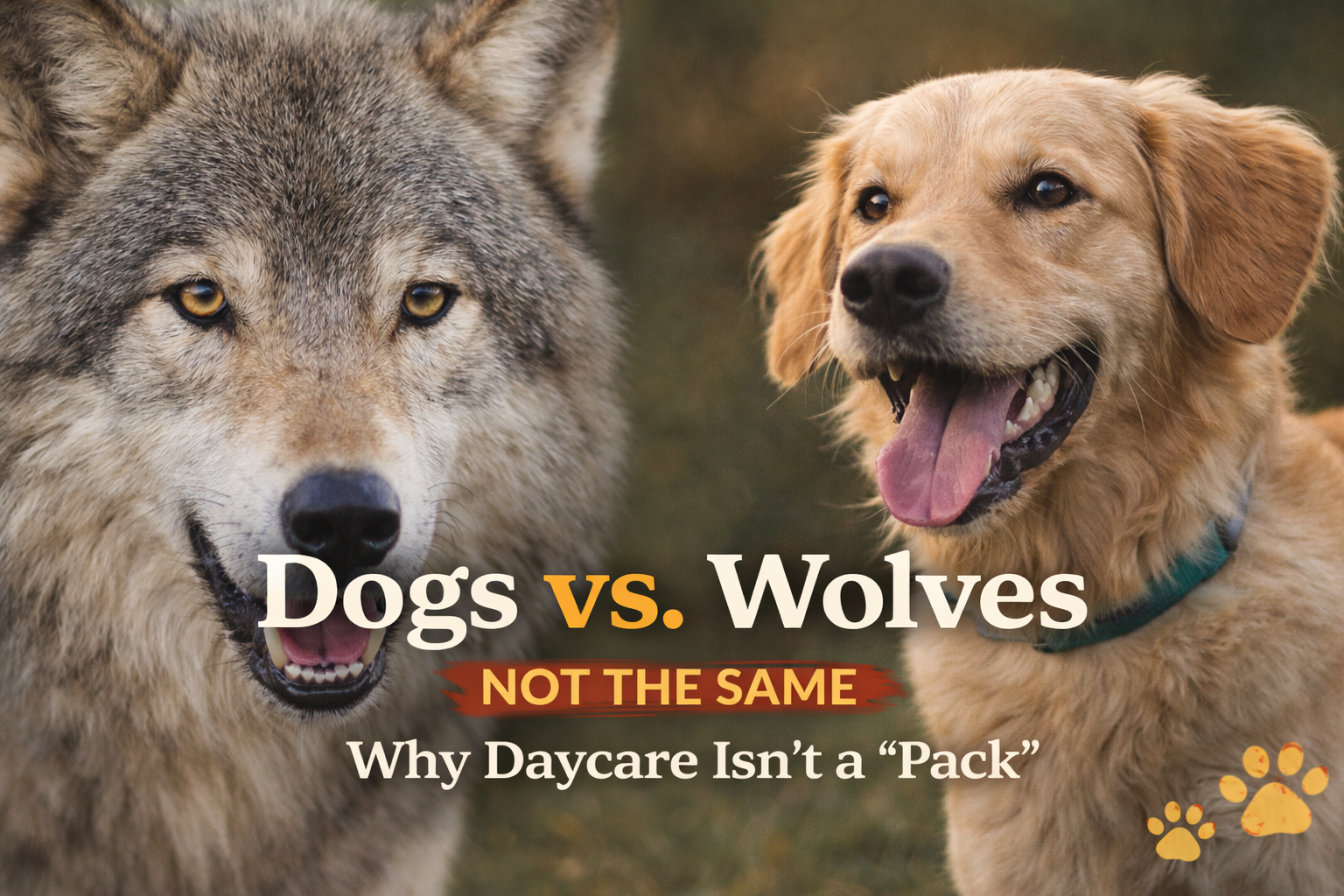
Dogs vs. Wolves
Why wolf “pack theory” does not apply to dog daycare
🐶 Dogs
- Evolved alongside humans for thousands of years
- Seek human guidance, reassurance, and interaction
- Comfortable with touch, eye contact, and voice cues
- Play for fun, enrichment, and social bonding
- Thrive in structured, supervised group settings
- Rely on humans to manage play and prevent conflict
🐺 Wolves
- Wild animals focused on survival
- Avoid humans whenever possible
- Eye contact signals challenge or threat
- Live in family-based packs (parents + offspring)
- Play is limited and energy is conserved
- Conflicts may escalate without intervention
🚩 Why This Matters in Dog Daycare
Dogs are not wolves, and daycare groups are not natural packs. Facilities that use “no touch” or “no eye contact” policies based on wolf theory remove the very tools dogs need to feel safe and regulated.
Quality daycare relies on active human involvement, structure, and supervision.
Dogs and wolves began to diverge genetically about 20,000–40,000 years ago.
Here’s the simple breakdown:
Gray wolves are the ancestors of domestic dogs
A subset of wolves started living closer to humans
The friendliest, least fearful wolves survived better around people. people began selectively breeding for desired traits
Over thousands of generations, this led to genetic, behavioral, and physical changes
Those wolves gradually became dogs
By around 15,000–20,000 years ago, dogs were already genetically distinct enough to be considered a separate population—not just wolves with training.
Why this matters (especially for daycare philosophy 🐾)
Dogs evolved to read human faces, gestures, and emotions
They rely on human guidance, touch, and communication
Wolves did not evolve this way
This is why wolf “pack theory” does not apply to dogs, especially in group care settings
In short:
Dogs didn’t just get tamed — they evolved with us.